
Articles
Short, considered pieces on claims, evidence, stakeholder alignment, advocacy, and the decisions that sit behind public communication.
Field Notes on Influence & Proof
This is AGC’s editorial desk: arguments from the field, evidence-bound case studies, and selected news from the practice. It is for people who have to explain a claim, choose a course of action, or carry a difficult conversation inside an institution.
[05 / 06]What this is for
AGC will publish when there is a useful distinction to make, a mechanism to explain, or a piece of work whose evidence can be shown responsibly. The purpose is practical judgment, not a stream of content for its own sake.

The editorial desk
Short, considered pieces on claims, evidence, stakeholder alignment, advocacy, and the decisions that sit behind public communication.
Accounts of advisory work where disclosure is permitted. Each will state the context, intervention, evidence, and the limits of what can be concluded.
Selected updates on new work, speaking, published resources, and developments that affect the practice or its field.
On the desk
These are working titles, not published articles. They indicate the questions AGC intends to examine first.
Why reach, attention, and donor visibility do not establish that an idea was used or changed a decision.
How to distinguish a supported contribution claim from a reasonable inference and an assertion the evidence does not carry.
What happens when partners share a workplan but have no shared account of influence, authority, or public language.
Why a report can satisfy a requirement and still leave leaders without the evidence needed for the next decision.
Case-study standard
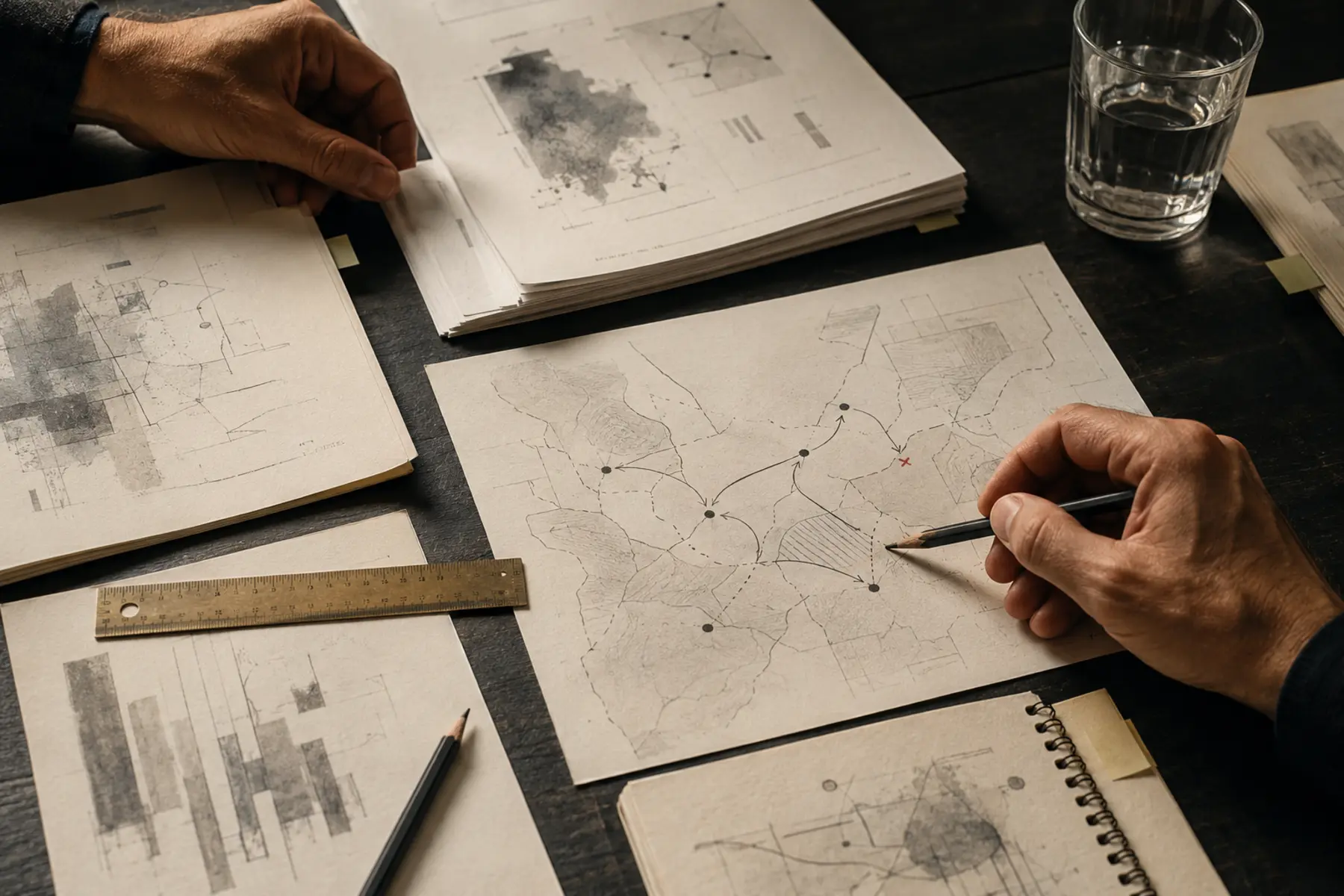
Where disclosure is permitted, each case will name the operating context, the problem diagnosed, the work undertaken, the evidence of use or change, and what cannot fairly be claimed. No client name, logo, or result will appear simply to decorate the practice.
Read the evidence standard →